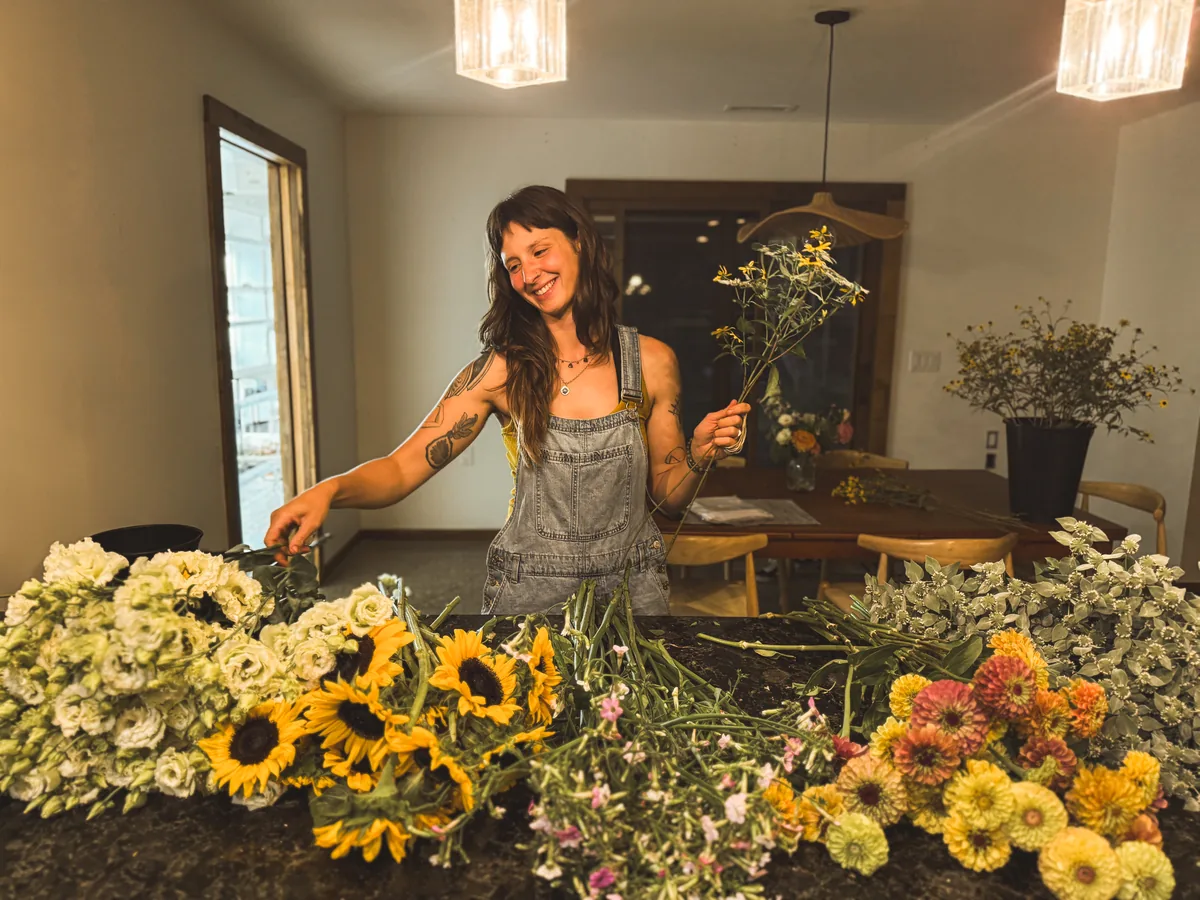
The Cosmos Lesson
On the cosmos that wouldn’t bloom and the stranger that saved the bouquets.
Mid-season has arrived with everything but the expected. The weather, the flower temperaments, the highs followed close behind by lows; all of it has asked me to stay resilient in the field.
If this work promises one thing, it’s that uncertainty is the only certainty.
At the halfway point, the plan’s results are in whether I like them or not. It would be easy to keep replaying what I could have done differently. But I can’t farm in hindsight. I have to move with the season.
The plan has already had its way with me. As the last plantings of summer hit the field, adapting is the only tool I have left, so I’m loosening my grip on the reins.
Every season asks the same devotion: watch closely, learn nature’s rhythm, carry the lesson forward.
This being our first true year, the plan was simple: lean on the staple crops I knew best, and leave a little room to experiment. The staples would carry the bouquets; the experiments might teach me something worth running with.
I didn’t expect the teaching to come from the sure things. Cosmos, a cornerstone of my plan, have humbled me this year.
Everyone expects cosmos dancing in their summer bouquets. They are light and untamable in the field, a burden but endearing all the same. In years past they have been abundant without much attention from me, so they made this season’s list without a second thought.
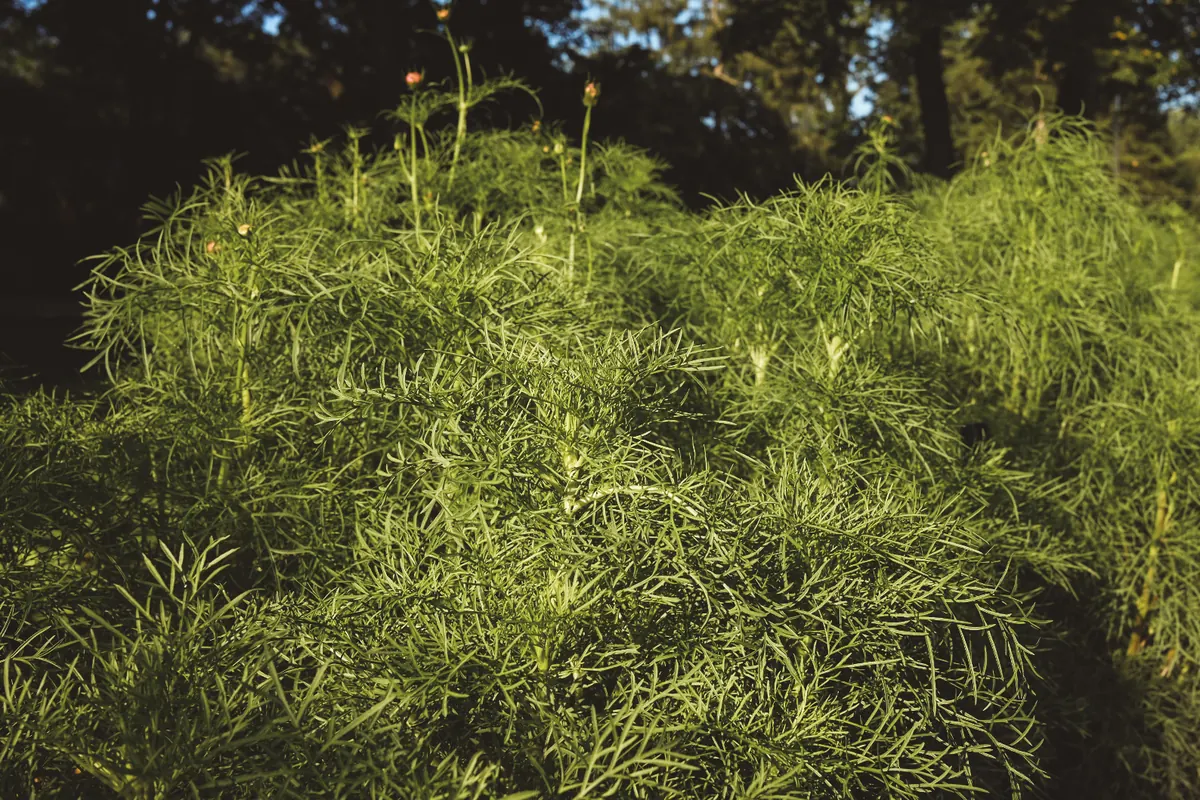
But, cosmos have subtleties: they keep close track of day length. Experienced grower friends taught me last season that cosmos flower faster and more reliably once days dip under about 14 hours. At the height of summer we get 15 or more, and all that extra light tells the plant to keep building leaves and stems, lush and green and flowerless, until the days shorten enough to let it bloom.
I let that lesson slip. I’d never noticed cosmos short on blooms in summers past, so I changed nothing. What has changed is my eye. I’ve learned to better observe, which meant I got to watch my mishap unfold in real time.
My first succession of cosmos produced nothing but foliage. I pushed my first planting back in favor of a crop I knew less well, scabiosa, and the trade didn’t work like I’d hoped. They were far less productive than an earlier cosmos planting.
Just when I was ready to be hard on myself, the unexpected stepped in like magic. For all the cosmos I lacked, rudbeckia triloba, a crop I had never grown before, became a star. I started the tiny seed last October and watched it climb to seven feet, never guessing it would be the thing to pick me up and add the twinkle my bouquets needed. They were unbothered by the erratic weather, completely steady and bountiful.
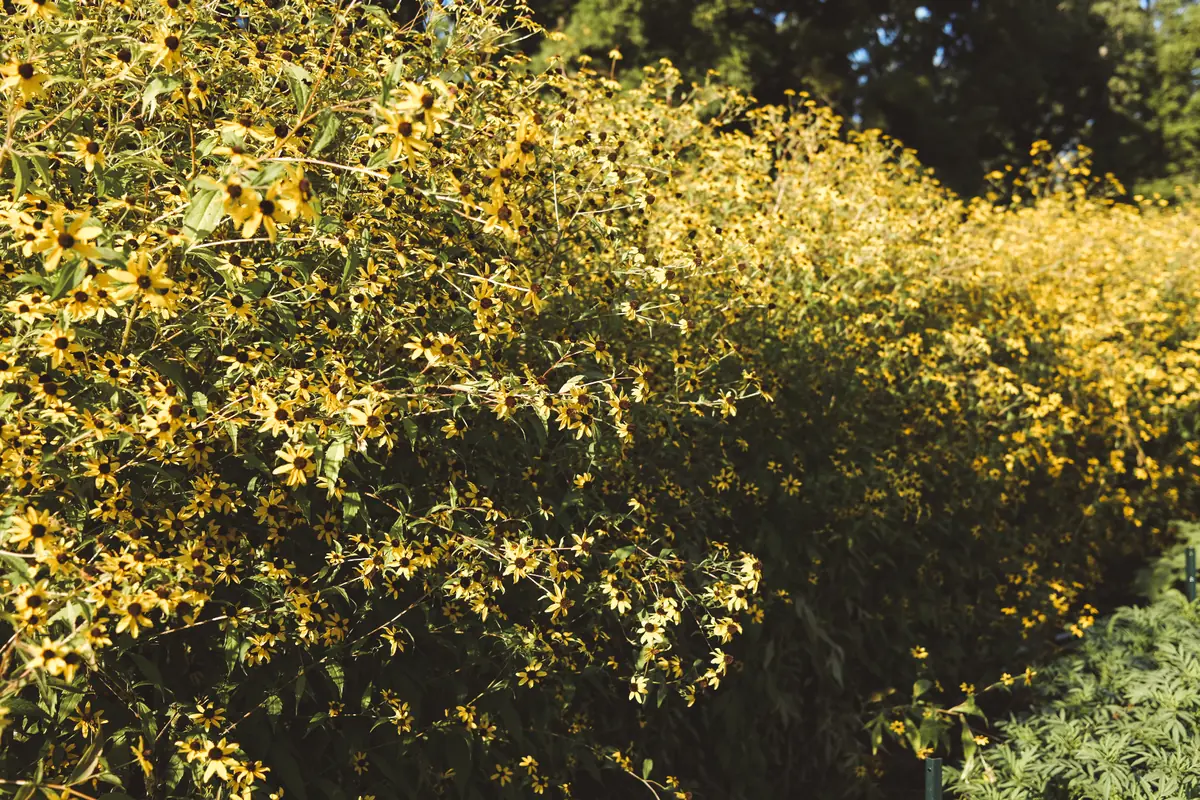
They did more for me than I could have predicted, and now they are setting a feast of seed for all the goldfinches late summer invites to the field.
That is the shift farming keeps asking of me: let the challenge be the teacher.
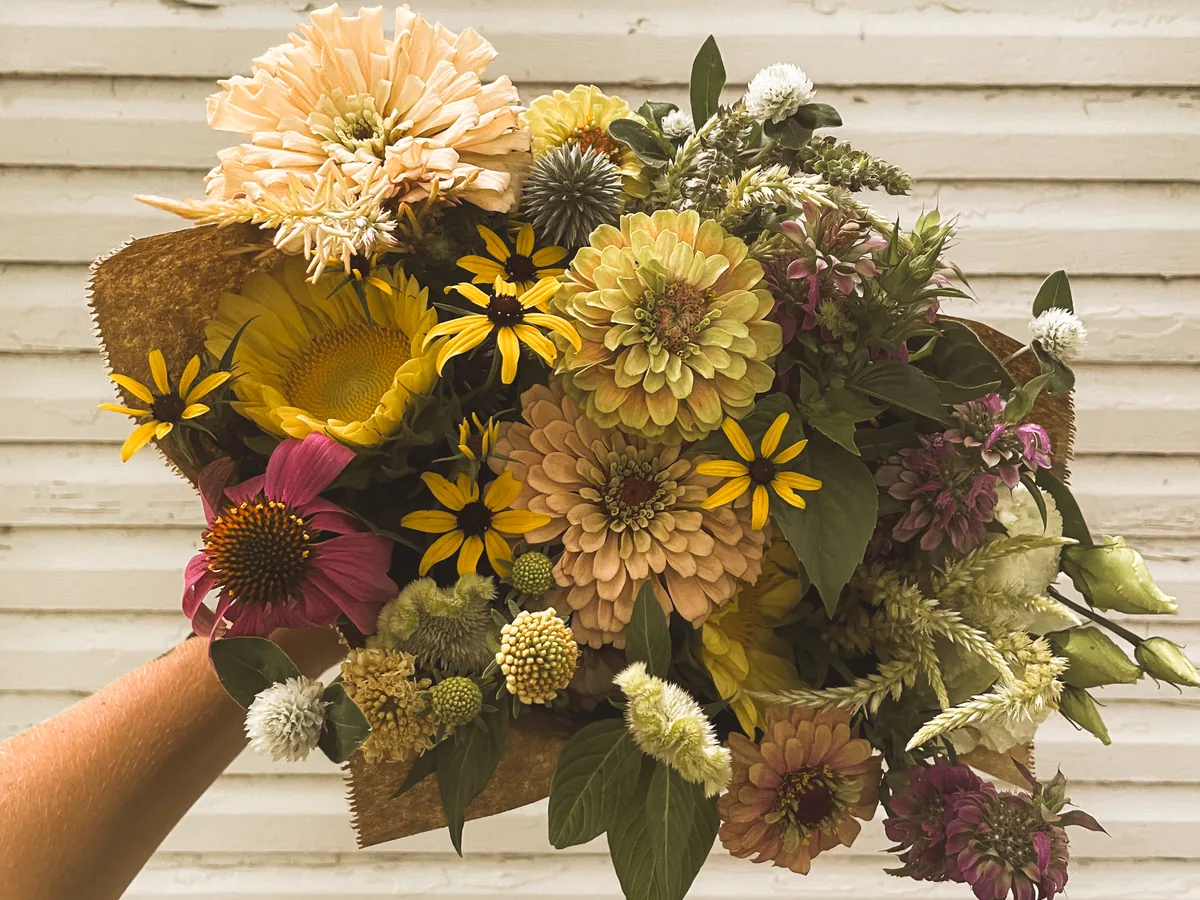
Mid-season hands you the same glass either way, half empty and half full at once. The difference is where you let your eye rest. When I am feeling low about what isn’t going right, in the field or anywhere else, there is always something growing along without my help, waiting to show me how good things really are.
Fretting just won’t do when your business partner is Mother Nature.